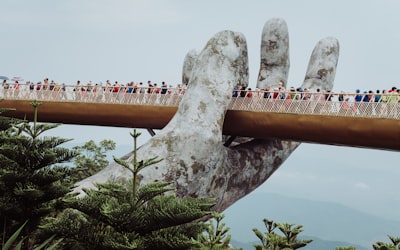
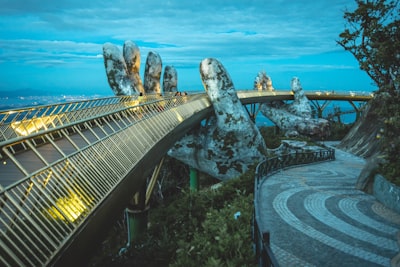
Ha Long Bay limestone karsts rising from emerald water at sunset
Home/Routes/Vietnam North to South
Street FoodMountainsHistoryBeachesCulture

Vietnam Road Trip: North to South

Hanoi → Sa Pa → Ninh Binh → Hue → Hoi An → Ho Chi Minh City. Fourteen days from the chaotic pho stalls of Hanoi through misty mountain terraces, karst river caves, imperial citadels, lantern-lit ancient towns, and the electric street life of Saigon. The food alone is worth the flight.

Photo: Ammie Ngo / Unsplash
1,700 km (1,056 miles)
Distance
14 Days
Duration
~30 hours total (trains, flights, buses)
Travel Time
Moderate
Difficulty
October - December
Best Season
4.8 (387)
🎒
$550-$850
Budget (hostels, street food) ($25-40/day)
🏮
$1,230-$2,120
Mid-Range (boutique hotels, restaurants) ($60-100/day)
$2,900-$5,500
Luxury (resorts, private tours) ($150-350/day)

In This Guide

Why This Trip

Vietnam is one of those rare countries where you can spend $30 a day and feel like you're living lavishly. A bowl of pho costs 40,000 VND ($1.60). A cold bia hoi on the sidewalk is 5,000 VND ($0.20). A tailored suit in Hoi An runs $150. And the experiences you get for that money - trekking through cloud-wrapped rice terraces, rowing through limestone caves, eating your way through the greatest street food culture in Southeast Asia - would cost ten times more anywhere in Europe.

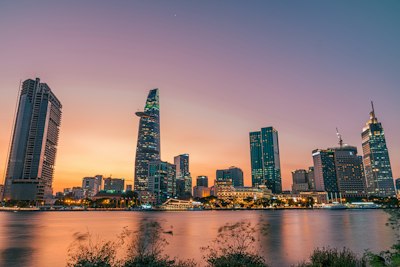
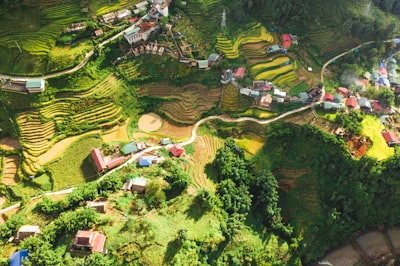
The north-to-south route follows the country's natural spine. You start in Hanoi, where a thousand years of history collide with controlled chaos on every street corner. Then north to Sa Pa's mountains, where Hmong and Dao communities have farmed terraced hillsides for centuries. Back through the surreal karst landscape of Ninh Binh, then south along the coast through Hue's imperial ruins, Hoi An's lantern-lit streets, and finally into the relentless, forward-looking energy of Ho Chi Minh City.

What makes Vietnam extraordinary for travelers is the density of contrast. In two weeks you'll go from misty mountain homestays to tropical island beaches, from ancient pagodas to rooftop bars, from the Reunification Express rattling through rice paddies to a motorbike weaving through Saigon's midnight traffic. The food changes every few hundred kilometers. The accents shift. The landscape transforms.

Vietnam is not a relaxing vacation - it's an overwhelming, beautiful, occasionally frustrating, deeply rewarding experience that will recalibrate your sense of what travel can be. Come hungry, stay flexible, and leave your rigid schedule at home.

🚂
Getting Around Vietnam

Vietnam is a long, narrow country - 1,650 km from Hanoi to Ho Chi Minh City. The Reunification Express train runs the full length in 33 hours, but most travelers combine overnight trains, domestic flights (VietJet and Bamboo Airways are budget-friendly), and buses. No rail pass needed - just book individual legs as you go. The Grab app is essential for city transport.

Hanoi → Sa Pa: 6 hrs (sleeper train/bus)
Hanoi → Hue: 14 hrs (sleeper train) or 1.5 hrs (flight)
Hue → Hoi An: 3 hrs (car via Hai Van Pass)
Itinerary

Day-by-Day Breakdown

14 days, 7 stops, 1,700 km from Hanoi to Saigon. The full Vietnam experience.

Hanoi Old Quarter street with motorbikes and hanging lanterns
Photo: Silver Ringvee / Unsplash
D1-2

Hanoi - Old Quarter, Street Food & Lake Life

🚂 N/A (arrival)
Overnight
Hanoi (Old Quarter)
$15-$80/night

Old Quarter (36 Streets)

Neighborhood · Half day

Each street was historically named after what it sold - Silk Street, Silver Street, Paper Street. Now it's a maze of motorbikes, pho stalls, and cold bia hoi (draft beer for 25 cents). Walk it. Get lost. That's the point. The chaos has a rhythm once you tune in.

Hoan Kiem Lake & Ngoc Son Temple

Landmark · 2 hours

The spiritual center of Hanoi. Walk the red Huc Bridge to Ngoc Son Temple on the island. Early morning is when locals do tai chi along the water's edge. Weekend nights the streets around the lake close to traffic and fill with performers, food carts, and families.

Street Food Trail

Food Experience · Ongoing

Hanoi is arguably the best street food city on earth. Must-eats: pho bo (beef noodle soup) at Pho Thin on Lo Duc Street, bun cha (grilled pork with noodles - the dish Obama ate), banh mi from a cart (anywhere), and egg coffee at Cafe Giang. Sit on the tiny plastic stools. It's part of the experience.

Temple of Literature

Historic Site · 1.5 hours

Vietnam's first university, built in 1070. Peaceful courtyards, ancient stone stelae listing scholars' names on the backs of stone turtles. One of the few Hanoi structures not destroyed during wars. Early morning is quietest.

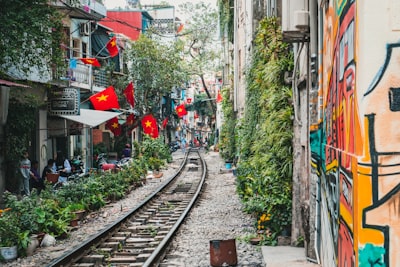
Train Street

Unique Experience · 30 min

A narrow residential street where a train passes twice daily, inches from people's front doors. Cafes line the tracks - you sip your Vietnamese coffee, then press against the wall when the train comes through. Check times locally, they change. Police periodically close access, so ask your hotel.

🎬 Creator Reels from This Stop
Creator reel from Hanoi

Morning pho on tiny plastic stools in Hanoi's Old Quarter - this is the real deal

Creator reel from Hanoi

Egg coffee at Cafe Giang. Sounds weird, tastes like tiramisu in a cup

Creator reel from Hanoi

Walking around Hoan Kiem Lake at sunrise - Hanoi at its most peaceful

🍽️
Where to Eat

Eat on the street, not in restaurants. Pho for breakfast (always), bun cha for lunch, banh cuon (steamed rice rolls) from a stall, and end each night with bia hoi and grilled meats on Beer Corner at Ta Hien Street. Budget $5-10/day on food and eat like royalty.

Plan This Exact Route in Tourific

Get real-time transport options between cities, creator content at every stop, safety scores, weather forecasts, and local prices in Vietnamese Dong. One tap to hand off directions in Google Maps or Apple Maps.

Plan in Tourific
Plan Vietnam road trip in Tourific app
Budget

Cost Breakdown by Travel Style

Real costs for 14 days in Vietnam. One of the best-value destinations on earth.

🎒
Budget
Hostels, street food, buses
Transport (trains, flights, Grab)$80-$120
Accommodation (13 nights)$200-$350
Food (14 days)$150-$200
Activities & Entry Fees$80-$120
SIM, Tips, Misc$40-$60
Total (14 days)$550-$850
🏮
Mid-Range
Boutique hotels, restaurants, flights
Transport (trains, flights, Grab)$200-$350
Accommodation (13 nights)$500-$900
Food (14 days)$300-$500
Activities & Entry Fees$150-$250
SIM, Tips, Misc$80-$120
Total (14 days)$1,230-$2,120
Luxury
Resorts, private guides, fine dining
Transport (trains, flights, Grab)$400-$600
Accommodation (13 nights)$1,400-$3,000
Food (14 days)$600-$1,000
Activities & Entry Fees$300-$500
SIM, Tips, Misc$200-$400
Total (14 days)$2,900-$5,500

Vietnam remains one of the world's best travel bargains. A budget traveler can eat three incredible meals, sleep in a clean room, and explore all day for under $40. The Vietnamese Dong (VND) runs about 25,000 to $1 USD - quick math: drop four zeros and divide by 2.5. The Tourific app converts prices in real-time so you always know what you're spending.

Get exact estimate in app
Hoi An Ancient Town lanterns glowing over the Thu Bon River at night
Hoi An Ancient Town, Vietnam
Good to Know

Essential Tips & Street Smarts

Vietnam rewards the prepared and the flexible. These tips will save you money, stress, and awkward moments.

⚠️

Cross the street by walking steadily at a consistent pace - traffic will flow around you. Do not stop, do not run, do not make sudden movements. This feels insane the first time. By day three it's second nature. The motorbikes are watching you and adjusting. Trust the system.

⚠️

Negotiate the price before getting on any motorbike taxi (xe om). Better yet, use the Grab app - it's Southeast Asia's Uber and shows the fare upfront. Grab is safer, cheaper, and avoids the 'tourist price' problem entirely. Works for cars and bikes.

⚠️

The Reunification Express train is the classic way to travel north-south. Hanoi to Hue takes 14 hours overnight in a sleeper berth. It's slow, rattly, and one of the most memorable train rides in Asia. Book a 4-berth soft sleeper - the 6-berth hard sleeper is tight. Bring snacks and enjoy the scenery.

⚠️

Carry small denominations. Street vendors, motorbike drivers, and small shops often can't (or claim they can't) break 500,000 VND notes ($20). Keep a stash of 10,000-50,000 VND bills for daily purchases. ATMs dispense large notes, so break them at convenience stores or hotels first.

⚠️

Always agree on prices before services - especially for cyclo rides, boat trips, and market purchases. Vietnamese vendors respect confident negotiation but dislike aggressive haggling. Smile, counter-offer at 40-50% of asking price, and walk away if they won't budge. They'll often call you back.

Best Time to Go

Best
October - December: Dry season across most of the country. Comfortable temperatures in the north (18-25°C), warm in the south. Rice terraces are golden in October. Hoi An lantern festival is magical. Fewest typhoon risks.
Best
January - March: Cool and dry in the north (perfect for Sa Pa trekking). South is warm and sunny. Tet (Lunar New Year, late Jan/Feb) is festive but expect closures and higher prices for 1-2 weeks.
Great
April - May: Warming up everywhere. Beach season begins in central Vietnam. Sa Pa rice terraces are being planted - beautiful flooded mirrors. Getting humid but not oppressive yet.
Fair
June - August: Hot (35°C+) and humid everywhere. Rainy season begins in the south. Central coast is actually at its best - dry and sunny. Sa Pa terraces are emerald green. Typhoon risk increases in September.
Fair
September: Peak typhoon season for central Vietnam (Hue, Hoi An, Da Nang). Flooding is possible. North and south are fine. Rice harvest in Sa Pa makes for remarkable photography but muddy trails.

Visa & Practical Info

E-Visa (most nationalities)

90-day e-visa available online for $25

Apply at evisa.xuatnhapcanh.gov.vn (official site)

Processing takes 3 business days

Multiple entry - you can leave and re-enter

Some nationalities get 15-45 day visa exemptions

Money & Connectivity

Currency: Vietnamese Dong (VND). ~25,000 VND = $1 USD

Cash is king for street food & markets. Cards accepted at hotels

ATMs everywhere - Vietcombank has lowest fees

Buy a local SIM at the airport ($5-8 for 30 days, unlimited data)

WiFi is excellent - even rural homestays usually have it

Preparation

What to Pack

Rain jacket (packable)
Vietnam's weather changes fast. Even in 'dry season' you'll hit sudden rain, especially in the central highlands and mountains. A lightweight packable jacket saves you daily.
Mosquito repellent (DEET-based)
Essential outside of cities, especially in the Mekong Delta and Sa Pa at dusk. Dengue exists in Vietnam - protect yourself, particularly during rainy season.
Quick-dry clothing
The humidity is relentless (70-90%). Cotton takes forever to dry. Synthetic or merino fabrics are a game-changer when you're sweating through temples and trekking rice terraces.
Grab app (pre-installed)
Vietnam's ride-hailing app. Works for motorbike taxis, cars, and food delivery. Set it up with your phone number before arrival. In cities, Grab is cheaper and safer than street taxis.
Universal power adapter (Type A/C)
Vietnam uses a mix of Type A (US-style) and Type C (European) outlets. Most hotels have both, but carry an adapter for older guesthouses.
Small daypack
For trekking in Sa Pa, temple visits, and market runs. Leave your big bag at the hotel. A 20L pack with water, rain jacket, and camera is all you need each day.

Ready to Travel Vietnam North to South?

Plan this exact route with AI-powered cost estimates, creator content at every stop, real-time transport options, and one-tap navigation handoff.